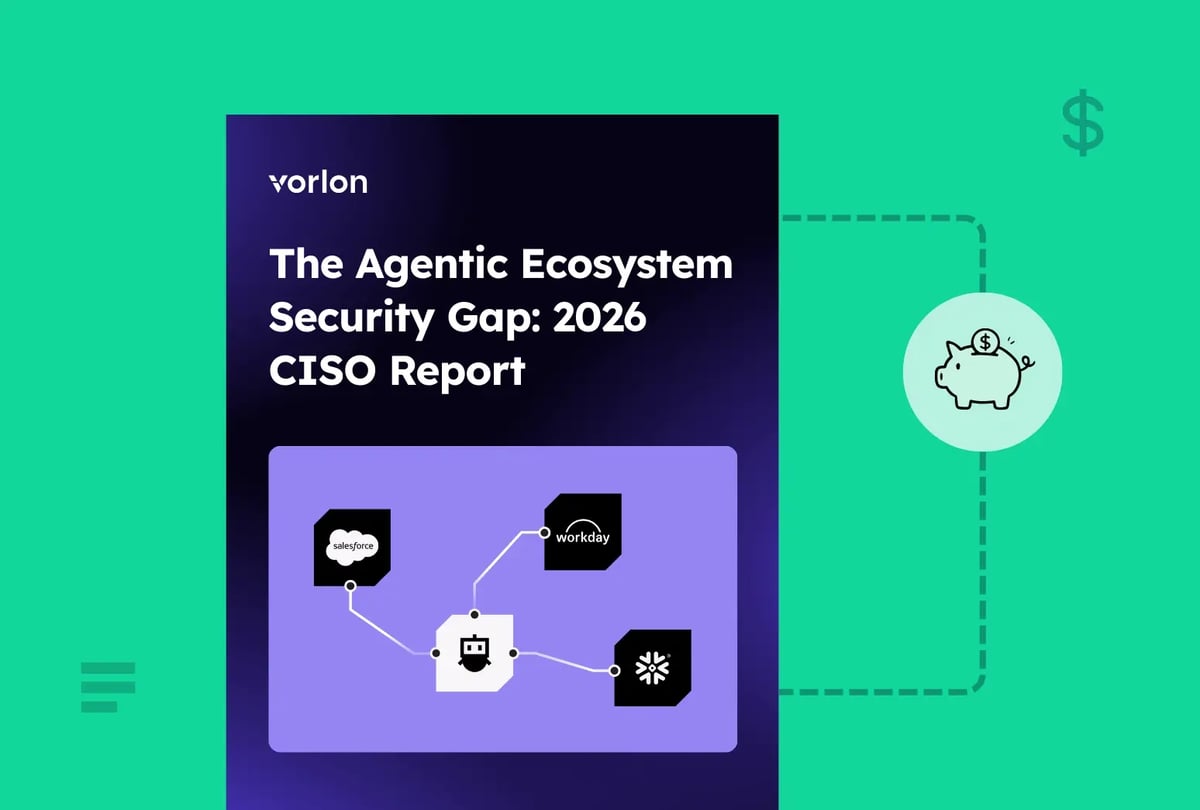
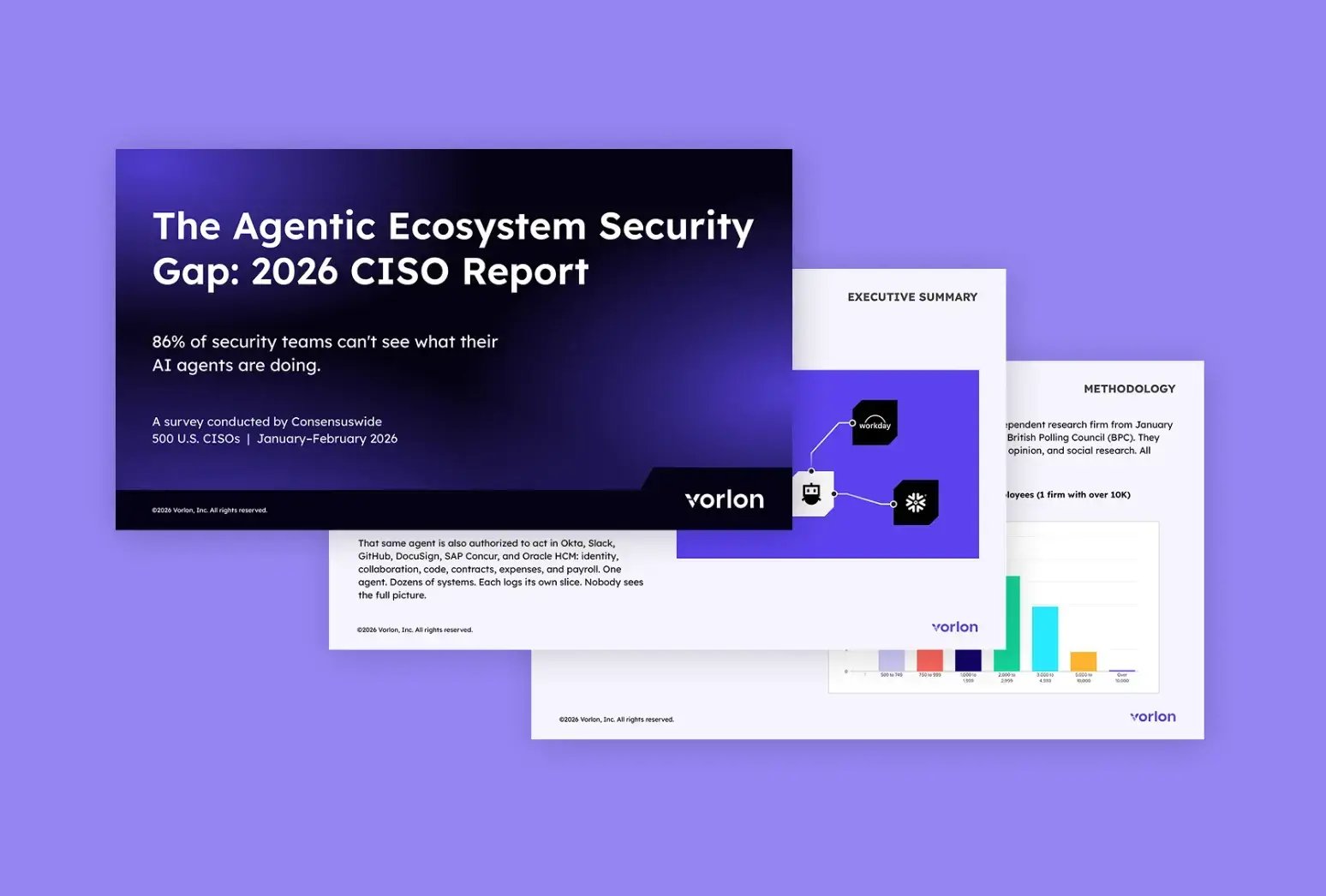
Financial services organizations are the most security-invested enterprises on earth. They have the largest security budgets, the most experienced teams, and more tools running in their environments than any other sector. According to our The Agentic Ecosystem Security Gap: 2026 CISO Report, a survey of 500 U.S. security leaders, financial services CISOs run an average of 15.6 security tools across SaaS and AI security combined, about 20% above the cross-industry average of 13.1.
They are also getting breached at above-average rates.
37.7% experienced a supply chain attack involving a SaaS vendor in 2025, about 26% above the cross-industry rate. 38.7% were hit by social engineering attacks targeting SaaS credentials, compared to 33.6% overall. 32.1% experienced unauthorized data exfiltration through SaaS-to-AI integrations. Each figure beats the cross-industry average.
The question is not whether financial services is trying. The question is whether the tools the sector has invested in were built for the threat it actually faces. The answer, increasingly, is no.
The front door and the engine room
For decades, enterprise security was built around a clear mental model: protect the perimeter, control access, audit configurations. The tools that came out of that era such as SaaS Security Posture Management platforms, Cloud Access Security Brokers, and Identity Threat Detection tools , are sophisticated and genuinely useful. They were built for the front door.
The threat has moved to the engine room.
The engine room is where the work actually happens. This is where AI agents traverse SaaS systems autonomously, where OAuth tokens grant persistent cross-platform access without requiring re-authentication, where custom integrations move sensitive data between applications at machine speed, where a single compromised SaaS vendor can cascade failures across an entire supply chain. None of this looks like a login event. None of it triggers a configuration alert. Most existing security tools were not designed to see it.
The tools running in most financial services organizations were built to govern access. The question regulators are now asking is whether you can reconstruct what happened after access was used. Those are different questions, and they require different architecture.
When financial services CISOs were asked to evaluate 11 specific security capabilities such as detecting new or risky integrations, seeing what data AI tools exchange with SaaS applications, distinguishing human from non-human behavior, and coordinating response across multiple SaaS platforms, they reported limitations in their current tools across every single one. Depending on the capability, 83% to 97% of financial services CISOs cited limitations. Not in a few areas. In all of them.
This is not a resource problem. It is an architecture problem.
The AI agent risk gap
The financial services sector is more alert to AI agent risk than any other industry in the survey. 45.3% of financial services CISOs characterize AI agents as a critical security risk, the highest figure of any vertical and about 44% above the cross-industry rate of 31.4%. 58.5% call supply chain breach their top priority risk, about 26% above the cross-industry rate of 46.6%.
That elevated awareness is appropriate. AI agents in financial services are operating in production environments, accessing customer account data, executing transactions, querying risk systems, and moving sensitive information between platforms via API integrations, often autonomously, often at speeds no human analyst is reviewing in real time.

The problem is that awareness of the risk and the ability to manage it are not the same thing. A financial services CISO who understands that AI agent activity is a major attack surface, but whose security stack can only see application-layer events within individual SaaS platforms, is informed about a threat they cannot actually detect or respond to. That gap between perception and capability is where incidents live.
What OAuth tokens have to do with it
28.3% of financial services CISOs experienced compromised OAuth tokens or API keys in 2025. OAuth tokens are not just another credential type. They are the primary authentication mechanism through which AI agents access SaaS systems.
When a user authorizes an AI agent to access Salesforce, their email, or a financial data platform, that authorization is issued as an OAuth token. The token grants persistent, cross-platform access, often with broad permissions, and does not require re-authentication. An agent can query, extract, and move data across systems continuously without triggering the login events that most security monitoring is built around.
When a token is compromised, the attacker has the same access as the agent it was issued to — moving through connected systems quietly, persistently, and largely invisibly to tools designed to detect human behavior patterns.
Only 37.7% of financial services CISOs claim comprehensive real-time OAuth governance. More than six in ten are managing the credential type most central to the agentic ecosystem without real-time visibility into how those credentials are being used.
The compliance deadline
The architecture problem is no longer just a security problem. It is a compliance problem.
The SEC Cybersecurity Disclosure Rules require public financial services companies to disclose material cybersecurity incidents within four business days of determining materiality, and to provide annual disclosures describing their processes for identifying and assessing material risks from third-party service providers. The survey found that 30% of financial services CISOs experienced a supply chain attack via a SaaS vendor in 2025, a category of incident that may meet the SEC's materiality threshold in many cases. Annual disclosures asking companies to describe their third-party risk management processes are increasingly consequential, particularly given that financial services CISOs cited limitations in their current tools across all 11 security capabilities evaluated, ranging from 83% to 97%.
FFIEC guidance establishes baseline expectations for how U.S. banks and credit unions manage third-party and ICT risk, including requirements for vendor oversight, incident response planning, and audit trail maintenance.
For financial services organizations with EU operations, DORA went live in January 2025 with further obligations: a register of all ICT third-party providers, incident classification within hours, and regulatory reporting within 72 hours, with penalties for sustained non-compliance reaching 1% of average daily worldwide turnover.
What good looks like
The financial services organizations best positioned for what comes next have moved from configuration auditing to runtime monitoring. They treat the data layer as the primary security surface: what data is moving, between which systems, through which integrations, accessed by which agents.
They have extended their incident response playbooks to cover agentic ecosystem incidents. Their IR teams know what an AI agent incident looks like, how to determine blast radius across connected SaaS systems, and how to reconstruct a forensically complete timeline of agent actions. A compromised OAuth token is not an IT ticket. It is a potential supply chain event.
And they have closed the ownership gap. When a SaaS vendor announces a breach, one team owns the impact assessment and knows what the first 72 hours look like.
The survey found that only 44.3% of financial services CISOs claim comprehensive incident response coverage for their SaaS and AI ecosystem. The majority have work to do. The compliance timeline makes the urgency clear.
The bottom line for financial services CISOs
Financial services is not underinvesting in security. It is investing heavily in tools that were not built for the threat surface that now matters most.
The agentic ecosystem is comprised of AI agents, SaaS integrations, OAuth tokens, API connections, and non-human identities. It's where sensitive financial data moves, where adversaries operate, and where regulators are increasingly directing their attention. It is also the surface that most existing security tools were not designed to see.
The architecture problem cannot be solved by adding more tools built on the same assumptions. It requires a fundamentally different approach: one that starts at the data layer, extends across the full ecosystem, and can answer the question regulators are now specifically asking like what happened, to which data, through which systems, and can you prove it?
→ Read the full 2026 CISO Report
About Vorlon
Vorlon is the Agentic Ecosystem Security Platform built for enterprises where AI agents, SaaS applications, and third-party integrations are already handling sensitive financial data. Vorlon's patented DataMatrix™ technology builds a live model of how sensitive data, identities, and integrations interact across your environment, giving security teams the visibility, forensics, and coordinated response capabilities needed to detect threats, assess blast radius, and reconstruct exactly what happened across every connected system.
For financial services organizations navigating SEC disclosure requirements, FFIEC examination expectations, and the growing complexity of the agentic ecosystem, Vorlon provides the audit trail and runtime visibility that legacy tools were not built to deliver.
Frequently asked questions
What is agentic ecosystem security and why does it matter for financial services?
Agentic ecosystem security refers to the practice of securing the runtime interactions between AI agents, SaaS applications, third-party integrations, and non-human identities — the layer of the enterprise where sensitive data actually moves, but where most traditional security tools have limited or no visibility. For financial services organizations, this matters because AI agents are actively operating in production environments, accessing customer data, executing workflows, and moving information between systems via OAuth tokens and API connections. A security program that can govern access but cannot see what agents do with that access after it is granted has a fundamental visibility gap, one that is increasingly being exploited and examined by regulators.
What does the SEC cybersecurity disclosure rule require for AI-related incidents in financial services?
The SEC's cybersecurity disclosure rules require public companies to disclose material cybersecurity incidents within four business days of determining materiality, and to provide annual disclosures describing their processes for managing material risks from third-party service providers. An AI agent incident — unauthorized data exfiltration through a SaaS-to-AI integration or a compromised OAuth token used for unauthorized access — could meet the SEC's materiality threshold depending on the scope and nature of data affected. Organizations that cannot determine materiality quickly, because they lack visibility into what their AI agents were doing with sensitive data, face compounded risk: the incident itself, and the inability to meet disclosure timelines.
What is an OAuth token and why is it a security risk for financial services AI deployments?
An OAuth token is an authorization credential issued when a user or application grants another application access to resources on their behalf. In the context of AI agents, OAuth tokens are the primary mechanism through which agents access SaaS systems — email, CRM platforms, financial data systems, collaboration tools. Unlike passwords, they grant persistent, often broad access without requiring re-authentication and operate silently in the background at machine speed. When a token is compromised, an adversary gains the same cross-platform access as the agent it was issued to. The 2026 CISO Report found that 28.3% of financial services CISOs experienced compromised OAuth tokens or API keys in 2025, while only 37.7% claim comprehensive real-time OAuth governance.
What is FFIEC guidance on AI and third-party risk management for banks?
The Federal Financial Institutions Examination Council has established guidance frameworks requiring banks and credit unions to maintain comprehensive third-party risk management programs, including oversight of technology vendors, SaaS providers, and AI tools that access or process customer data. FFIEC expectations include maintaining a current inventory of third-party relationships, conducting risk assessments before and during vendor relationships, and monitoring vendor performance. As AI tools become integrated into financial services workflows, FFIEC examiners are increasingly looking at how institutions govern the AI layer — what tools are in use, what data they access, and what controls are in place.
Why are financial services companies still experiencing breaches despite high security investment?
The 2026 CISO Report offers a data-driven explanation: most existing security tools were built for a threat surface that no longer represents where the most significant risks live. Configuration auditing, access governance, and application-layer detection were designed for a world where humans were the primary actors in enterprise systems. The agentic ecosystem introduces AI agents, non-human identities, and machine-speed data movement across interconnected SaaS platforms as the primary operational layer. Financial services organizations that have invested heavily in front-door security while the threat has moved to the engine room will continue to experience above-average breach rates until the architecture catches up.
All data: The Agentic Ecosystem Security Gap: 2026 CISO Report. Conducted by Consensuswide, January 27 – February 9, 2026. n=500 U.S. CISOs. Vertical subsets: n=106 Financial Services U.S. CISOs; n=62 Insurance U.S. CISOs; n=52 Healthcare and Life Sciences U.S. CISOs.




.png?width=329&height=222&name=blog%20451%20why%20saas%20and%20ai%20are%20converged%20(1).png)