---
title: "Top Findings: The 2026 Agentic Ecosystem Security Gap Report"
description: 500 CISOs. 13 security tools. A 99.4% breach rate. The 2026 Agentic Ecosystem Security Gap Report reveals why this is an architecture problem, not a knowledge problem.
image: https://vorlon.io/hubfs/Blog%20ImageTop%20Findings%20The%202026%20Agentic%20Ecosystem%20Security%20Gap%20Report-1.png
---
[AI Security](https://vorlon.io/ai-security) > Top Findings: The 2026 Agentic Ecosystem Security Gap Report
# Top Findings: The 2026 Agentic Ecosystem Security Gap Report
[Amir Khayat, CEO](https://vorlon.io/ai-security/author/amir-khayat-ceo) |
Apr 17, 2026
[ ](http://www.linkedin.com/shareArticle?mini=true&url=https%3A%2F%2Fvorlon.io%2Fai-security%2Ftop-findings-the-2026-agentic-ecosystem-security-gap%3Futm_medium%3Dsocial%26utm_source%3Dlinkedin) [ ](https://twitter.com/intent/tweet?original_referer=https%3A%2F%2Fvorlon.io%2Fai-security%2Ftop-findings-the-2026-agentic-ecosystem-security-gap%3Futm_medium%3Dsocial%26utm_source%3Dtwitter&url=https%3A%2F%2Fvorlon.io%2Fai-security%2Ftop-findings-the-2026-agentic-ecosystem-security-gap%3Futm_medium%3Dsocial%26utm_source%3Dtwitter&source=tweetbutton&text=Top+Findings%3A+The+2026+Agentic+Ecosystem+Security+Gap+Report) [ ](mailto:?subject=Check%20out%20https%3A%2F%2Fvorlon.io%2Fai-security%2Ftop-findings-the-2026-agentic-ecosystem-security-gap%3Futm_medium%3Dsocial%26utm_source%3Demail%20&body=Check%20out%20https%3A%2F%2Fvorlon.io%2Fai-security%2Ftop-findings-the-2026-agentic-ecosystem-security-gap%3Futm_medium%3Dsocial%26utm_source%3Demail)
Top Findings: The 2026 Agentic Ecosystem Security Gap Report
6:11
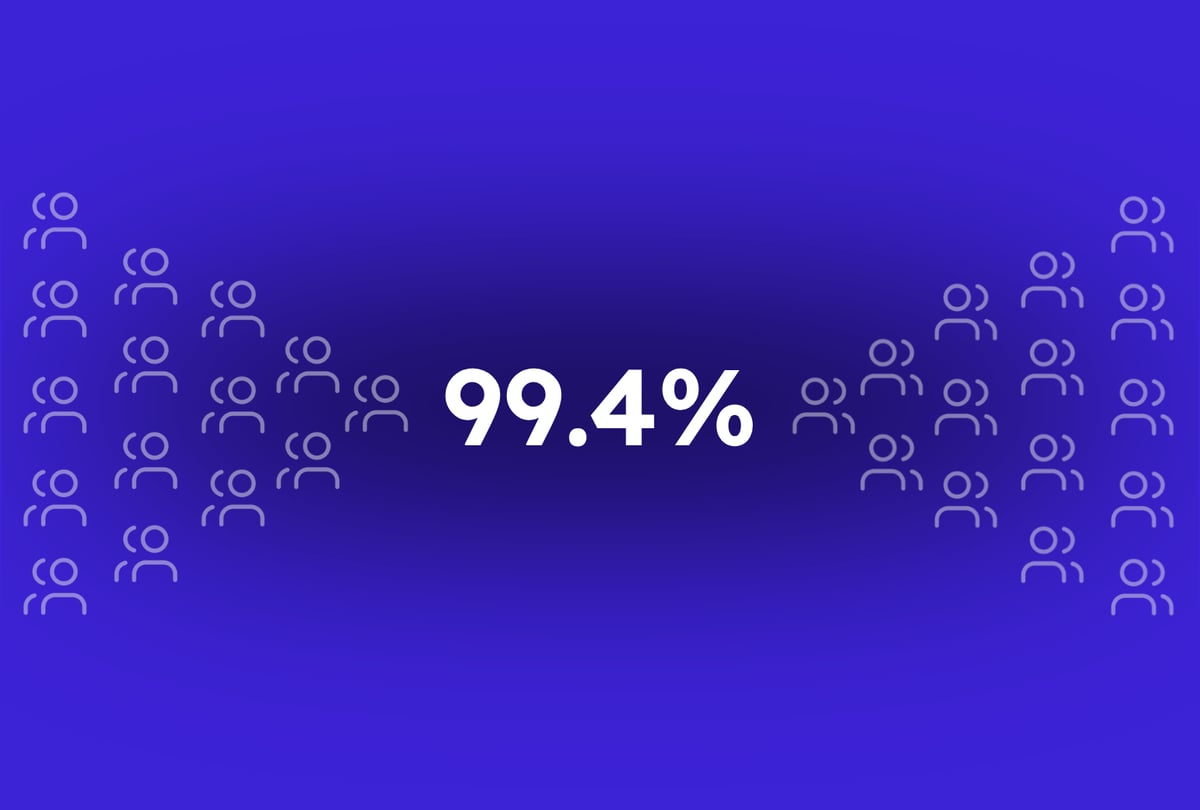
99.4% of organizations experienced at least one SaaS or AI ecosystem security incident in 2025. Only three of the 500 CISOs we surveyed reported zero incidents. The other 497 experienced at least one. Those organizations were running an average of 13 dedicated security tools across SaaS and AI security combined. They understood the risks. They were investing to address them.
Key facts
1. 99.4% of organizations experienced at least one SaaS or AI ecosystem security incident in 2025
2. Only 3 of 500 CISOs reported zero incidents
3. Average of 13 dedicated security tools deployed per organization across SaaS and AI security
4. 27.4% were breached through compromised OAuth tokens despite 89.2% claiming strong governance
## What does a 99.4% breach rate actually tell us?
It tells us the problem is not awareness and it is not effort.
The most common incident types clustered within a tight range: social engineering via SaaS at 33.6%, unauthorized SaaS-to-AI data exfiltration at 30.8%, suspicious AI agent activity at 30.4%, supply chain attacks via SaaS vendors at 30%, and compromised OAuth tokens at 27.4%. No category was rare. No vertical was protected.
The uniform distribution across incident types is itself a signal. This is not a set of isolated vulnerabilities. It is a systemic gap in how the enterprise is being secured.
## The OAuth governance paradox
Here's the contradiction at the center of our 2026 CISO survey dataset: 89.2% of CISOs say their OAuth token governance is strong or comprehensive, yet 27.4% of those same organizations were breached through compromised OAuth tokens or API keys in 2025.
In other words, a meaningful share of organizations that believe this layer is "covered" were compromised through the exact mechanism they're most confident in.
This is not a story about negligent CISOs or uninformed teams. We surveyed 500 U.S. CISOs at organizations with 500+ employees, and the pattern repeats across nearly every capability we measured.
The tools most organizations rely on for SaaS and AI security can create the appearance of coverage without delivering the substance of it because most security architecture was built for the front door (configs, permissions, login events), while the [risk has moved to the engine room](https://vorlon.io/ai-security/survey-of-500-cisos-shows-threat-has-moved-to-engine-room-security-architecture-hasnt) (tokens, integrations, and agent-driven activity at runtime).
## Why do confident claims and breach outcomes contradict each other?
The confidence paradox is the finding I keep returning to. Three separate claims in the survey directly contradict the incident data from the same respondents.
Three “can’t-both-be-true” contradictions
- 78.6% claim comprehensive real-time data flow mapping yet 86.8% say they can't see AI-SaaS exchange.
- 77% claim comprehensive behavioral monitoring yet 30.8% experienced SaaS-AI exfiltration.
- 89.2% claim strong OAuth governance yet 27.4% were breached via OAuth tokens/API keys.
### **Why are confident CISOs still getting breached?**
The tools most organizations rely on were built for application-level, human-speed threats. They monitor configurations, permissions, and login events. They were not built to observe what happens in the runtime layer where AI agents, OAuth tokens, and SaaS-to-SaaS integrations operate.
Claiming strong governance in a tool that cannot see the execution layer is not overconfidence. It is a category error.
## What specific gaps do security teams report in their current tools?
We asked CISOs to rate their current tools across 11 specific capabilities relevant to securing the agentic ecosystem. Every single capability was rated as a limitation by 83% to 87% of organizations. The range spans only four percentage points across all 11 items.
### Architectural weakness prevails
Every capability measured was limited for 83-87% of organizations. Only 4 percentage points separate the most common gap from the least common gap.
1. Cannot see sensitive data flows across applications: 87% report limitations
2. Cannot see what AI tools are exchanging with SaaS applications: 86.8%
3. Focused on configuration and compliance rather than runtime threats: 86.2%
4. Too many siloed tools with no unified view: 85.8%
5. Lack behavioral analytics and anomaly detection: 85.8%
6. Alerts lack context and clear remediation guidance: 85.6% (highest “major limitation" rate at 22%)
7. Limited or no coverage of AI tools and integrations: 85.4%
8. Cannot coordinate response across multiple SaaS applications: 85.4%
9. Cannot detect new or risky integrations: 84.8%
10. Cannot detect OAuth token or API key abuse: 84.8%
11. Cannot distinguish between human and non-human behaviors: 83.4%
## What is the "engine room" and why does security architecture need to reach it?
The front door is where users log in, where permissions are set, where application configurations are audited. The tools built around that model are genuinely good at what they were designed to do.
The engine room is something different. It is the runtime layer where AI agents operate autonomously through OAuth tokens and API integrations, moving sensitive data between systems at machine speed, without triggering the login events and configuration alerts that traditional security monitoring is built around.
Quick answer
Front door vs. engine room
**Front door:** Configurations, permissions, login events (human-speed threats)
**Engine room:** Runtime agent actions, OAuth persistence, API-to-API data movement (machine-speed threats)
## What does this mean for security investment in 2026?
86.8% of CISOs plan to increase their SaaS security budget in 2026, and 84.2% plan to increase their AI security budget. The urgency is real. The question is whether that spend changes outcomes or whether it reinforces the same architecture that already produced near-universal incidents.
## The bottom line
The [Agentic Ecosystem Security Gap: 2026 CISO Report](https://go.vorlon.io/vorlon-2026-ciso-report-agentic-ecosystem-security-gap) describes what happened in 2025, the first year of serious enterprise AI deployment, when one in three organizations experienced an AI agent security incident and 99.4% experienced some form of SaaS or AI ecosystem compromise.
These figures establish the baseline level of enterprise exposure. And they point to the same conclusion. This is an architecture gap, not an effort gap.
---
### Survey methodology
The [Agentic Ecosystem Security Gap: 2026 CISO Report ](https://vorlon.io/vorlon-releases-2026-ciso-survey-agentic-ecosystem-security-gap)surveyed 500 U.S. CISOs at organizations with 500 or more employees across all major industry verticals. The survey was conducted by Consensuswide, an independent research firm, from January 27 to February 9, 2026.
About the author

[Amir Khayat, CEO](https://vorlon.io/ai-security/author/amir-khayat-ceo)
[Follow me on LinkedIn ](https://www.linkedin.com/in/amir-khayat/)
Amir Khayat is the CEO and co-founder of Vorlon. Amir has over 17 years of cybersecurity experience, including software development, and GTM roles. Amir served in the Israeli Defense Forces as a commander and combat soldier at the Paratrooper’s ...
[Read Full Bio](https://vorlon.io/ai-security/author/amir-khayat-ceo)
[ ](https://cta-service-cms2.hubspot.com/web-interactives/public/v1/track/click?encryptedPayload=AVxigLIFqhHbvMXr9sCtLg3SjGyxucXLDGAEZ6p7hVq%2FHj73J5jIl21ntspuXck0FDhLa5AoCVIiV6UPoFdmfyoCgk5gZhyQN0vNpJbQcKsyBPMqUuCsA79wUgKn%2BCq0jST2BYpRcl6MQO1nqRSUKrW04CR0pGt7umY8qquGOnnq3HJ0%2FYgVqp01i6ughr1Bd0ujJd4m2N8PUt6sJyfXCE46FwKHWOIg3dceObp%2BtoycGA%3D%3D&portalId=24426272)
### Related blogs
[View all blogs](https://vorlon.io/blog)
[
### The AI Agent Runtime Enforcement Gap Is Closed. Introducing Vorlon Guardian.
4 min read
Read More
](https://vorlon.io/ai-security/ai-agent-runtime-enforcement-gap-guardian)
[
Breach Response
### What the Canvas Educational Platform Breach Tells Us About Ecosystem Security
4 min read
Read More
](https://vorlon.io/ai-security/what-the-canvas-educational-platform-breach-tells-us-about-ecosystem-security)
[
Breach Response
### ShinyHunters Breached Charter, Carnival, and 7-Eleven in 30 Days
7 min read
Read More
](https://vorlon.io/ai-security/shinyhunters-breached-charter-carnival-and-7-eleven-in-30-days)
[
Breach Response
### The FBI Just Warned About Kali365. Microsoft 365 OAuth Tokens Are the Target.
5 min read
Read More
](https://vorlon.io/ai-security/the-fbi-just-warned-about-kali365.-microsoft-365-oauth-tokens-are-the-target)
## Featured resources
[
WHITE PAPERS AND RESEARCH
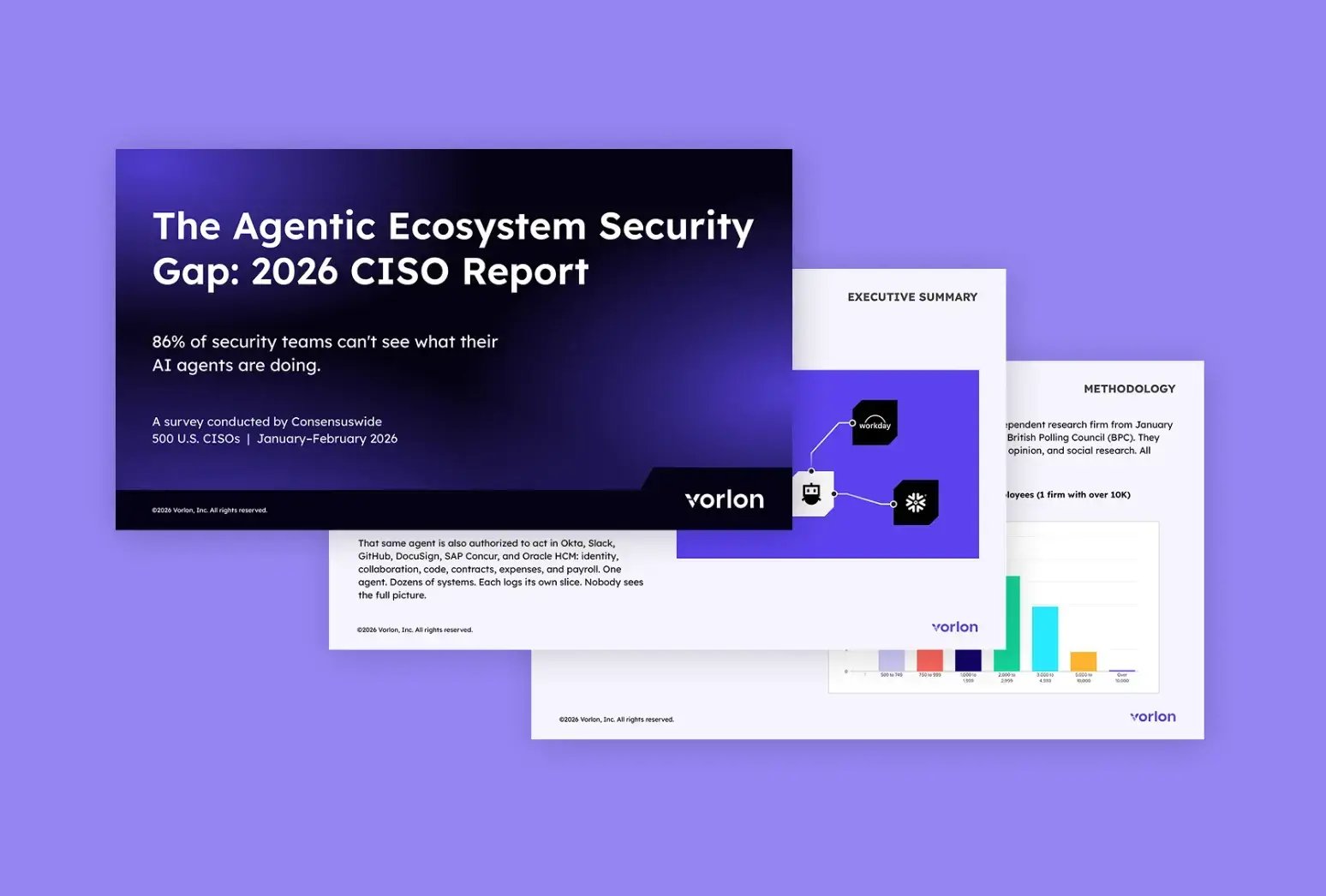
### The Agentic Ecosystem SecurityGap: 2026 CISO Report
Why 99% of Organizations Were Breached Through Their SaaS and AI Ecosystem Despite Record Security Investment
Read more
](https://go.vorlon.io/vorlon-2026-ciso-report-agentic-ecosystem-security-gap)
[.png?width=329&height=222&name=blog%20451%20why%20saas%20and%20ai%20are%20converged%20(1).png)
SaaS Security
### 451 Research: Why AI and SaaS Security Are Converging
451 Research highlights how AI and SaaS security are converging. Learn why integrations, OAuth, and ecosystem-level risk now define enterprise security.
Read more
](https://vorlon.io/saas-security-blog/451-research-ai-saas-security-convergence)
[
### DataMatrix™: Vorlon's Patented Approach to Agentic Ecosystem Security
Vorlon's DataMatrix™ technology is now patented. Learn how this intelligent simulation engine secures the agentic ecosystem by mapping AI agents, SaaS integrations, and data in motion.
Read more
](https://vorlon.io/saas-security-blog/datamatrix-vorlons-patented-technology)
## Get Proactive Security for Your Agentic Ecosystem
Book a Demo
[ ](https://vorlon.io)
## Sign up for industry insights and Vorlon news
Start Here
- [The Agentic Ecosystem Security Gap](https://vorlon.io/problems-we-solve)
- [The Agentic Ecosystem Signal to Action Layer](https://vorlon.io/our-solution)
Platform
- [Platform](https://vorlon.io/platform)
- [AI Agent Runtime Security](https://vorlon.io/ai-runtime-security)
- [Total Identity Security](https://vorlon.io/total-identity-security)
- [Data-Centric SaaS Security](https://vorlon.io/data-centric-saas-security)
- [Compliance Automation](https://vorlon.io/compliance-automation)
- [Apps Directory](https://vorlon.io/app-directory)
- [SecOps Integrations](https://vorlon.io/integrations)
Company
- [About](https://vorlon.io/about)
- [Careers](https://vorlon.io/careers)
- [Press Room](https://vorlon.io/press-room)
- [Resources](https://vorlon.io/resources)
- [Blog](https://vorlon.io/blog)
Let's Connect
- Talk to Sales

© 2026 Vorlon Inc. All rights reserved.
- [Terms of Use](https://vorlon.io/terms-of-use)
- [Privacy Policy](https://vorlon.io/privacy-policy)
- [Sitemap](https://vorlon.io/sitemap)
[](https://www.clickcease.com)
```json
{
"@context" : "https://schema.org",
"@type" : "BlogPosting",
"author" : {
"@type" : "Person",
"name" : "Amir Khayat, CEO",
"url" : "https://vorlon.io/ai-security/author/amir-khayat-ceo"
},
"dateModified" : "2026-04-21T07:56:11.959Z",
"datePublished" : "2026-04-17T19:37:22.000Z",
"headline" : "Top Findings: The 2026 Agentic Ecosystem Security Gap Report",
"image" : [ "https://vorlon.io/hubfs/Blog%20ImageTop%20Findings%20The%202026%20Agentic%20Ecosystem%20Security%20Gap%20Report-1.png" ],
"mainEntityOfPage" : {
"@id" : "https://vorlon.io/ai-security/top-findings-the-2026-agentic-ecosystem-security-gap",
"@type" : "WebPage"
},
"publisher" : {
"@type" : "Organization",
"logo" : {
"@type" : "ImageObject",
"url" : "https://vorlon.io/hubfs/Logo/Vorlon%20logo_two%20tone%20light.svg"
},
"name" : "Vorlon Inc."
}
}
```
```json
{
"@context" : "https://schema.org",
"@id" : "https://vorlon.io/#organization",
"@type" : "Organization",
"description" : "Vorlon provides security visibility across SaaS ecosystems, including integrations, identities, and data movement.",
"logo" : "https://vorlon.io/hs-fs/hubfs/ll-assets/Images/Vorlon_Logo_Large_White.png?width=139&height=33&name=Vorlon_Logo_Large_White.png",
"name" : "Vorlon",
"sameAs" : [ "https://www.linkedin.com/company/vorlon" ],
"url" : "https://vorlon.io/"
}
```
```json
{
"@context" : "https://schema.org",
"@id" : "https://vorlon.io/#website",
"@type" : "WebSite",
"name" : "Vorlon",
"publisher" : {
"@id" : "https://vorlon.io/#organization"
},
"url" : "https://vorlon.io/"
}
```
```json
{
"@context" : "https://schema.org",
"@id" : "https://vorlon.io/ai-security/top-findings-the-2026-agentic-ecosystem-security-gap#webpage",
"@type" : "WebPage",
"about" : {
"@id" : "https://vorlon.io/#article"
},
"description" : "Explore key findings from Vorlon’s research on the 2026 agentic ecosystem security gap, including risks from AI agents, SaaS integrations, and non-human identities.",
"isPartOf" : {
"@id" : "https://vorlon.io/#website"
},
"name" : "Top Findings: The 2026 Agentic Ecosystem Security Gap",
"url" : "https://vorlon.io/ai-security/top-findings-the-2026-agentic-ecosystem-security-gap"
}
```
```json
{
"@context" : "https://schema.org",
"@id" : "https://vorlon.io/#article",
"@type" : "Article",
"articleSection" : "AI Security",
"author" : {
"@type" : "Organization",
"name" : "Vorlon"
},
"dateModified" : "2026-01-01",
"datePublished" : "2026-01-01",
"description" : "A deep dive into emerging security risks driven by AI agents, SaaS ecosystems, and non-human identities, based on Vorlon research.",
"headline" : "Top Findings: The 2026 Agentic Ecosystem Security Gap",
"image" : "https://vorlon.io/hubfs/Blog%20ImageTop%20Findings%20The%202026%20Agentic%20Ecosystem%20Security%20Gap%20Report-1.png",
"keywords" : [ "agentic ecosystem security", "AI agent security", "non-human identities", "SaaS ecosystem risk", "OAuth security", "AI security gaps" ],
"mainEntityOfPage" : {
"@id" : "https://vorlon.io/ai-security/top-findings-the-2026-agentic-ecosystem-security-gap#webpage"
},
"publisher" : {
"@id" : "https://vorlon.io/#organization"
}
}
```
```json
{
"@context" : "https://schema.org",
"@id" : "https://vorlon.io/#report",
"@type" : "CreativeWork",
"about" : "Research on emerging security risks in AI-driven SaaS ecosystems, including agent behavior, integrations, and identity challenges.",
"creator" : {
"@id" : "https://vorlon.io/#organization"
},
"datePublished" : "2026-01-01",
"name" : "The 2026 Agentic Ecosystem Security Gap"
}
```
```json
{
"@context" : "https://schema.org",
"@id" : "https://vorlon.io/ai-security/top-findings-the-2026-agentic-ecosystem-security-gap#breadcrumb",
"@type" : "BreadcrumbList",
"itemListElement" : [ {
"@type" : "ListItem",
"item" : "https://vorlon.io/",
"name" : "Home",
"position" : 1
}, {
"@type" : "ListItem",
"item" : "https://vorlon.io/ai-security",
"name" : "AI Security",
"position" : 2
}, {
"@type" : "ListItem",
"item" : "https://vorlon.io/ai-security/top-findings-the-2026-agentic-ecosystem-security-gap",
"name" : "2026 Agentic Ecosystem Security Gap",
"position" : 3
} ]
}
```