The modern enterprise now runs on a converged SaaS and AI ecosystem. That ecosystem drives innovation and productivity, but it has also become the biggest blind spot in cybersecurity. The breaches of 2025 made that painfully clear, and Gartner’s latest research confirms it.
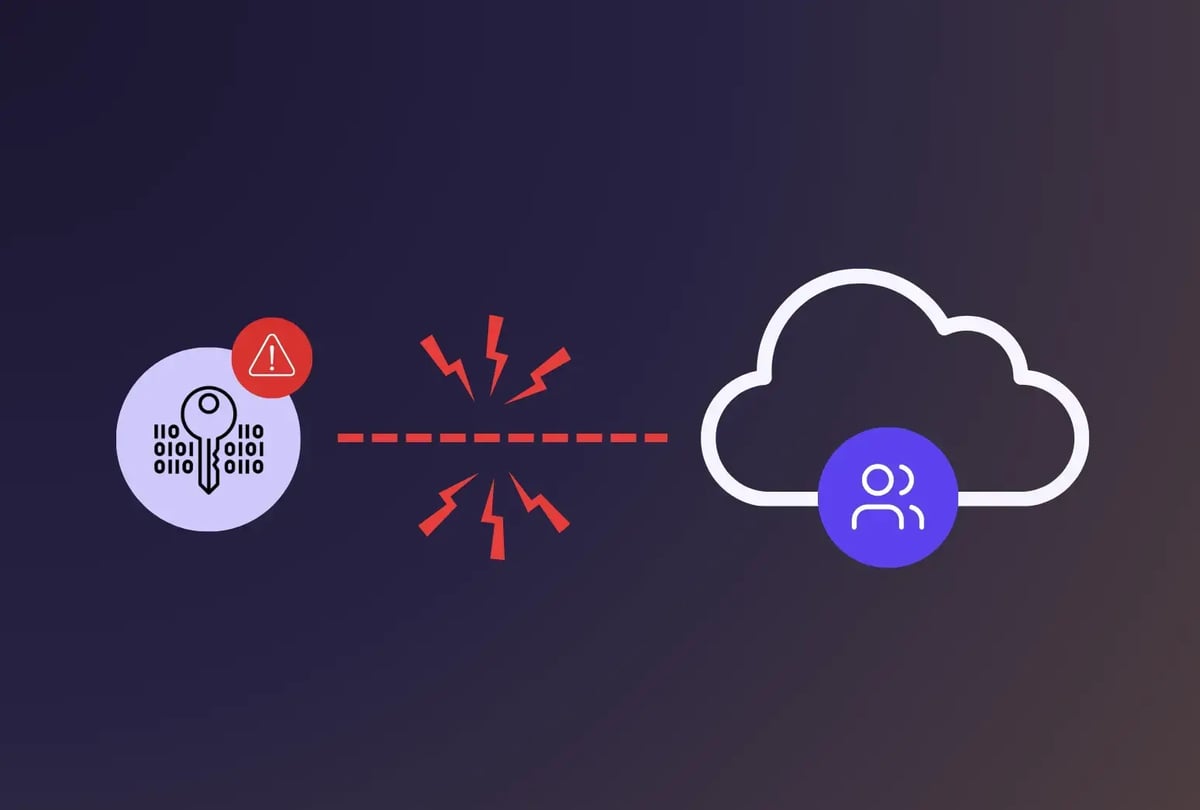
ShinyHunters, Salesloft/Drift, and Gainsight all exploited the same fundamental weakness: overprivileged OAuth tokens moving laterally across interconnected SaaS applications.
Gartner’s research, Mitigate Risks in SaaS-to-SaaS and Machine-to-Machine Connections, captures the risk most organizations are only beginning to understand. According to Gartner, “Treat SaaS as a mesh, not as siloed applications.”1

Treat SaaS as a mesh, not as siloed applications
SaaS platforms have evolved into expansive ecosystems, offering hundreds of third-party applications and integrations. This complexity will only increase as agentic AI accelerates functionality in the coming years. Therefore, treat SaaS not as isolated services but as interconnected ecosystems. Each major SaaS provider promotes its own ecosystem, which means organizations must monitor and secure these environments holistically, rather than focusing solely on individual applications.1
Our own analysis of the 2025 breaches found a common thread: the lack of ecosystem-wide behavioral monitoring with data-layer context. None of the victim organizations could see an out-of-profile OAuth app silently pulling a large volume of records across multiple SaaS systems. They saw normal API calls on one platform rather than an abnormal pattern across many.
According to Gartner, "By 2027, over 50% of major SaaS-related breaches will exploit overprivileged OAuth tokens used by M2M integrations.”1
The problem: OAuth tokens bypass traditional controls
According to Gartner, "Traditional cybersecurity tools are blind to runtime API behavior and token misuse."1
We see these weaknesses repeatedly in the field:
- Overprivileged access: OAuth tokens often grant broader permissions than necessary.
- Persistent access: Tokens stay valid long after sessions should expire.
- Cross-platform reach: A single token can open doors across multiple SaaS apps.
- Lack of visibility: Traditional tools can’t monitor data-in-motion across SaaS and AI.
The 2025 breaches proved these points. In the Salesloft/Drift incident, attackers stole OAuth tokens from a public GitHub repository and used them to access more than 700 organizations in just ten days.2 The tokens granted full access to Salesforce, Google Workspace, and Zscaler. Because API calls originated from Drift infrastructure, the logs looked completely normal. No single tool saw the simultaneous multi-platform data pull.
AI agents amplify the problem
Gartner’s prediction about AI agents is already visible in enterprise environments. AI systems are now making API calls, accessing sensitive data, and moving information between platforms faster than humans ever could.
According to Gartner, "Through 2027, 30% of organizations that fail to monitor SaaS integrations will lose significantly more sensitive data to autonomous GenAI agent integrations."1
That 30% number feels conservative to me when you consider that:
- Enterprises now average 473 SaaS applications.3
- AI agents operate autonomously with broad permissions.
- AI agents move data quickly and often go unseen by security teams.
- 77% of identities are non-human: service accounts, API keys, AI agents, and OAuth tokens.4
Traditional identity and access management tools weren't designed for this reality. They focus on human authentication but lack the behavioral analytics needed to distinguish between legitimate AI agent activity and malicious behavior.
Where traditional tools fall short
According to Gartner, "Runtime API abuse is difficult to detect."1
Here’s why existing security categories struggle with this problem:
- SSPM tools focus on configuration posture management. They can audit OAuth grants, but they rely on static configuration checks rather than behavioral monitoring. They don't track how identities interact with data in motion across your SaaS and AI ecosystem.
- SSE/SASE vendors operate at the network perimeter. They can't see SaaS-to-SaaS API calls that bypass the network entirely.
- ITDR tools focus on identity compromise, but can't track what happens to data after authentication succeeds.
- CNAPP/CIEM/DSPM solutions manage cloud infrastructure entitlements and help secure data at rest, but don't cover SaaS application permissions or cross-app data flows.
The result is enterprises deploy multiple point solutions but blind spots persist.
Lessons from the ShinyHunters Salesforce, Salesloft Drift, and Gainsight breaches
Major 2025 SaaS supply chain breaches showed how quickly attackers can move when no one is watching data-in-motion across your SaaS ecosystem.
|
SaaS supply-chain breach TTPs |
How to detect |
|
ShinyHunters uses vishing to trick employees into approving a fake Salesforce DataLoader app. |
Behavioral monitoring with data-layer context flags unusual SOQL patterns within hours. |
|
Salesloft/Drift attackers use stolen OAuth tokens to simultaneously access Salesforce, Google Workspace, and Zscaler. |
Cross-platform correlation catches the data-in-motion anomaly. |
|
Gainsight attackers register rogue connected apps inside a legitimate vendor tenant. |
Behavioral baselines alert security teams when Gainsight suddenly began exporting full data objects every hour. |
The bottom line: In each case, the average time to breach discovery was weeks or months. The industry average is 204 days.5 With ecosystem-wide behavioral monitoring, detection time drops to hours.
How Vorlon provides the visibility Gartner calls for
According to Gartner, “Cybersecurity leaders must discover, monitor, and govern machine-to-machine SaaS interactions to reduce risk and ensure secure, scalable business operations.”1 That's exactly what Vorlon delivers.
Here’s how it works:
- Map your ecosystem: Vorlon automatically discovers every application, integration, AI agent, and token in your environment.
- Track data-in-motion: We map how sensitive data flows between SaaS platforms and AI tools, creating a live model of your SaaS and AI ecosystem.
- Establish behavioral baselines: We learn what “normal” looks like — at the data layer — for both human and non-human identities.
- Detect anomalies: When a token, integration, or AI agent starts acting out of profile, Vorlon detects it.
- Enable coordinated response: Security teams can revoke OAuth tokens, freeze sessions, or trigger automated workflows across all connected SaaS applications.
This is the difference between app-specific configuration management and ecosystem-wide security.
What enterprises should do now
The three SaaS supply chain breaches of 2025 won't be the last. Here's what we recommend.
Immediate actions:
- Audit your OAuth tokens and API keys now
- Identify overprivileged grants and revoke inactive tokens
- Implement short expiration periods
- Establish governance for SaaS integrations
Strategic investments:
- Deploy ecosystem-wide monitoring that tracks data-in-motion across platforms
- Move from point-in-time to continuous monitoring for your third-party applications
- Focus on behavioral analytics, not just configuration checks
- Prepare for AI agent proliferation with specialized non-human identity governance
- Build SaaS-specific incident response playbooks
- Practice revoking OAuth tokens across multiple platforms simultaneously
The market is finally waking up
Gartner's research validates what the 2025 breaches demonstrated:
- OAuth tokens are the new passwords
- SaaS-to-SaaS connections are the new attack surface
- Traditional security tools can't protect against these threats
- Visibility into data-in-motion is essential
When we founded Vorlon, we knew this problem was coming. The breaches of 2025 proved it was here. Gartner’s latest research confirms it’s systemic.
The shift to SaaS and AI has unlocked tremendous productivity and created an invisible attack surface that moves at machine speed. Securing that surface requires something new: ecosystem-wide visibility and behavioral monitoring with data-layer context.
If you’re seeing the same blind spots Gartner describes, let’s talk. Reach out to me directly or schedule a demo. I’d love to show you how Vorlon can help your team see and secure your SaaS and AI ecosystem.
References:
[1] Gartner Mitigate Risks in SaaS-to-SaaS and Machine-to-Machine Connections, 4 December 2025. GARTNER is a registered trademark and service mark of Gartner, Inc. and/or its affiliates in the U.S. and internationally and is used herein with permission. All rights reserved.
[2] "Widespread Data Theft Targets Salesforce Instances via Salesloft Drift." Google Cloud Threat Intelligence.
[3] "2025 SaaS Management Report." Productiv.
[4] "Secure Salesforce and Your SaaS Supply Chain in 2026." Vorlon.
[5] "Cost of a Data Breach Report 2025." IBM Security.

.png?width=329&height=222&name=blog%20451%20why%20saas%20and%20ai%20are%20converged%20(1).png)