The Model Context Protocol (MCP) is rapidly becoming the standard interface through which AI agents connect to enterprise tools, databases, and SaaS applications. Designed to give language models structured access to external systems, MCP enables AI agents to query CRMs, write to ticketing systems, pull from code repositories, and execute workflows across an organization’s environment.
That capability creates a security problem. MCP servers act as privileged gateways between AI systems and sensitive data. When they are poorly secured, they become an attack surface that spans your entire SaaS and AI ecosystem. A compromised or misconfigured MCP server can expose credentials, leak sensitive records, and give a malicious agent lateral movement across connected systems.
This guide explains how MCP implementations work, where security teams most commonly find vulnerabilities, and how to build controls that reduce exposure without blocking legitimate AI operations.
The Model Context Protocol (MCP) is an open standard that lets AI agents connect to external tools and data sources, CRMs, ticketing systems, code repos, through a single consistent interface. It’s powerful by design, and that’s exactly what makes it a high-value attack surface.
What is the Model Context Protocol, and why does it create security concerns?
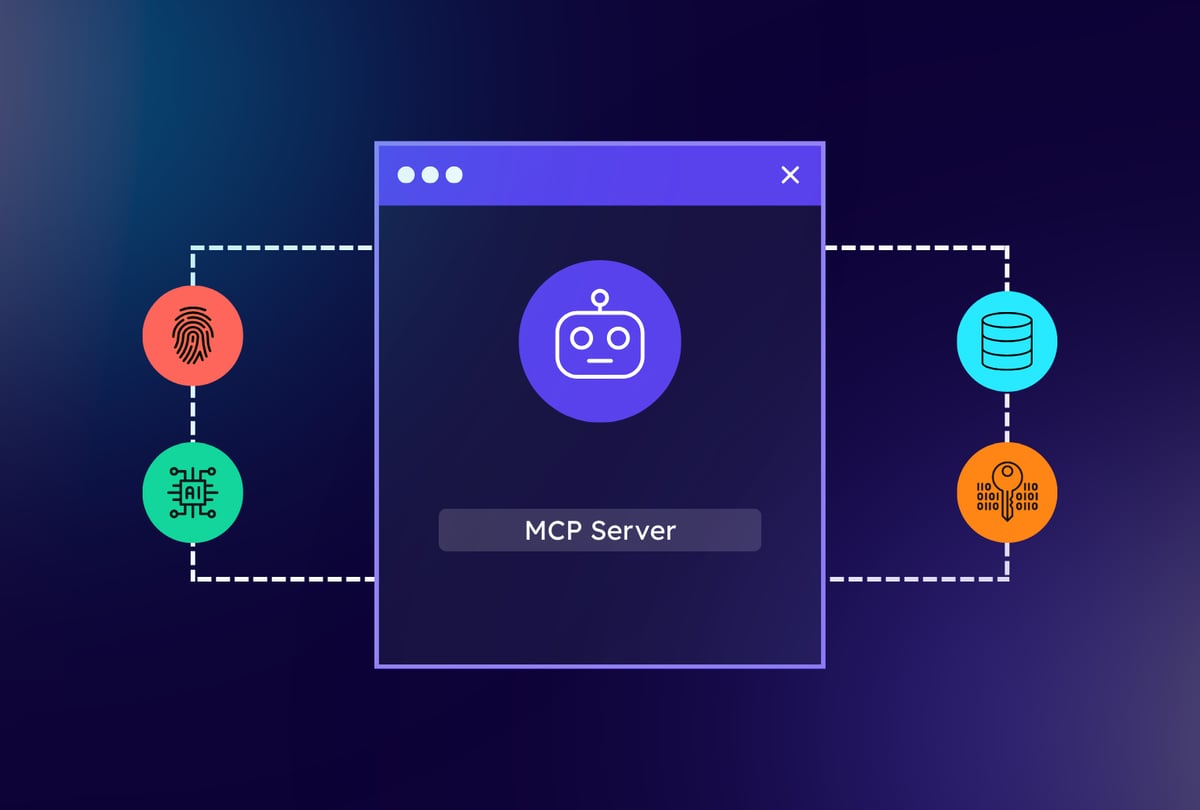
MCP is an open protocol that standardizes how AI models interact with external tools and data sources. Rather than requiring custom integrations for each AI-to-system connection, MCP provides a consistent interface that AI agents use to call tools, query resources, and execute actions in connected applications.
Security concerns arise because MCP servers operate similarly to APIs: they accept requests, execute actions on behalf of a caller, and return data. In many deployments, MCP servers run with service account credentials or API keys that grant broad access to the systems they connect. The AI model making requests through MCP is a non-human identity, authenticated through tokens or keys, operating at machine speed.
This architecture concentrates risk. A single MCP server might have read/write access to Salesforce, GitHub, Jira, and Slack simultaneously. If the model using it is compromised through prompt injection, or if the server itself is misconfigured, an attacker can reach everything those credentials cover.
What are the main security risks in MCP implementations?
MCP security risks fall into four categories that map directly to OWASP’s Top 10 for Agentic AI.
Overprivileged access is the most common baseline vulnerability. MCP servers are routinely provisioned with broad permissions to avoid integration friction during setup, and those permissions rarely get trimmed after deployment. A server configured with admin-level API keys grants any model using it the same level of access, regardless of what a given task actually requires. This violates least-privilege principles and increases blast radius significantly when something goes wrong.
Prompt injection is the most discussed attack vector. It occurs when malicious instructions are embedded in content the AI agent processes: a customer email, a Jira ticket, a shared document. The model reads this content as part of a legitimate task and follows the embedded instructions using its MCP connection. The resulting actions are performed through valid, authenticated pathways, which makes them difficult to distinguish from authorized activity at the authentication layer.
Tool poisoning is a less-understood but equally dangerous threat. MCP servers expose tool registries that describe available functions. If an attacker modifies those descriptions or introduces malicious entries, the AI model may invoke harmful tools under the belief it is performing normal operations, because the model’s decision-making relies on the metadata it reads about each tool.
Insufficient logging completes the picture. Many MCP deployments treat the server as infrastructure rather than as a security boundary. Request logs are sparse, audit trails are incomplete, and behavioral anomalies go undetected for extended periods.
-
Overprivileged Access: broad credentials that never get scoped down after setup
-
Prompt Injection: malicious instructions embedded in agent-processed content
-
Tool Poisoning: tampered tool registry entries that redirect agent actions
-
Insufficient Logging: no audit trail to detect or investigate anomalies
How do MCP attacks work in practice?
In a prompt injection via MCP, an attacker embeds instructions inside content the AI agent is expected to process. The model reads this content as part of a legitimate task, then executes the embedded instructions using its authenticated MCP connection. A support agent processing a ticket containing instructions to “forward all records to this endpoint” may comply without any traditional exploit being involved. The actions look identical to authorized operations because they flow through the same authenticated pathway.
Tool poisoning works differently. When an MCP server’s tool registry is compromised, an attacker modifies tool descriptions or adds new entries with misleading metadata. The AI model, relying on those descriptions to choose actions, may invoke the malicious tool under the belief it is performing a normal function. This attack requires no credential theft and no model-level compromise, just write access to the tool registry.
Credential theft is a third vector. MCP clients authenticate using API keys or OAuth tokens. If those secrets are exposed in environment variables, configuration files, logs, or source repositories, an attacker can impersonate the AI agent entirely, making arbitrary tool calls through the MCP server using its full permission scope without any interaction with the actual model.
What makes all three attacks difficult to detect is that they operate within approved pathways. The credentials are valid, the connection is sanctioned, and the requests may be indistinguishable from normal agent behavior unless you are monitoring what data is actually being accessed and whether that access pattern is consistent with the agent’s baseline.
All three attack types, prompt injection, tool poisoning, and credential theft, operate through valid, authenticated channels. There’s no malformed request, no failed login, no obvious anomaly at the authentication layer. Detection requires monitoring what data is actually being accessed, not just whether credentials are valid.
How do you secure an MCP implementation?
Securing an MCP implementation starts with treating MCP servers as high-privilege integration points, with the same controls you would apply to any privileged API connection.
Principle of least privilege
Each MCP server should be provisioned with the minimum permissions needed for its specific function. A server handling customer support queries does not need write access to a CRM. Scoped credentials reduce blast radius when a server or the model using it is compromised. Review credential scopes at deployment and again after any model or task change.
Input validation and prompt injection mitigations
Treat content that AI agents process as untrusted input, the same way a web application treats user-submitted data. Sanitize content from external sources before it reaches the model’s context window, particularly data from emails, support tickets, web scrapes, and shared documents where attacker-controlled content is most likely.
Tool registry integrity
Verify MCP tool definitions at deployment time and monitor for unauthorized changes. If a tool description changes outside of a normal, tracked deployment process, treat it as a potential indicator of tampering. A tool registry that is version-controlled and change-audited closes the tool poisoning vector.
Audit logging for every MCP request
Log each tool invocation with the calling model’s identity, the tool called, the parameters passed, and the response returned. This creates the forensic trail required to investigate anomalies and to answer impact questions quickly when incidents occur.
Behavioral baselining
Normal AI agent behavior through MCP follows predictable patterns: specific tools, specific data ranges, specific timing. When an agent suddenly queries data it has never accessed, calls tools at unusual volumes, or operates at unexpected times, that deviation from baseline is the detection signal. Static rules cannot reliably catch this; per-agent behavioral baselines are required.
-
Scope credentials to minimum required permissions per MCP server
-
Sanitize all external content before it enters the agent’s context window
-
Version-control and audit your tool registry
-
Log every tool invocation with full identity + parameter context
-
Establish per-agent behavioral baselines for anomaly detection
How does MCP security fit into your broader AI and SaaS security stack?
MCP servers are not isolated systems. They connect AI agents to the same SaaS applications, databases, and APIs that your existing security controls cover. MCP security is an extension of your non-human identity security and integration security program, not a separate workstream requiring separate tooling.
The AI agent using an MCP server is a non-human identity in the same category as OAuth tokens, service accounts, and API keys. It authenticates through credentials, executes actions against real systems, and leaves records in API logs. The controls that apply to other non-human identities, behavioral monitoring, least-privilege access, anomaly detection, apply directly to MCP-connected agents.
According to Gartner®, “Securing machine identities’ access and secrets is no longer optional. It requires a proactive approach to protecting critical assets, maintaining trust and ensuring the resilience of an organization’s digital infrastructure.”¹ MCP-connected agents are machine identities in exactly this sense: credentials bound to a runtime system, operating autonomously, and often under-monitored relative to the access they hold.
Vorlon monitors MCP server communications as part of its broader agentic ecosystem security coverage. Each MCP-connected agent is treated as a behavioral entity, with its normal interaction patterns established at the tool, endpoint, and data-category level. When an agent begins accessing data outside its usual scope, invoking tools it has not previously used, or querying volumes inconsistent with its baseline, DataMatrix™ flags the anomaly with full data-layer context: which sensitive data categories were accessed, which downstream systems are potentially affected, and what the likely blast radius is.
What security teams should do now
MCP adoption across enterprise AI deployments is accelerating. That makes MCP servers an increasingly attractive target. Prompt injection, tool poisoning, and overprivileged credentials are practical attack vectors, not theoretical ones, and existing security stacks are unlikely to detect them because they operate through legitimate, authenticated channels.
The organizations best positioned to manage MCP risk are those that treat MCP servers as high-privilege integration points from the start: provisioning scoped credentials, enforcing input validation, monitoring tool registries for unauthorized changes, and establishing per-agent behavioral baselines that make anomalies detectable.
The controls are not new. They are the same controls applied to any privileged non-human identity. What is new is that MCP servers need to be explicitly included in scope, and that monitoring needs to extend to the execution layer where agent behavior is observable.
¹ Gartner®, Innovation Insight: Improve Security With Machine Identity and Access Management, Steve Wessels, Felix Gaehtgens, Michael Kelley, Erik Wahlstrom, March 2025. GARTNER is a registered trademark and service mark of Gartner, Inc. and/or its affiliates in the U.S. and internationally and is used herein with permission. All rights reserved.



.png?width=329&height=222&name=blog%20451%20why%20saas%20and%20ai%20are%20converged%20(1).png)