APIs handle more sensitive data than most security teams realize. They now connect nearly every system, service, and user in the modern enterprise. They power SaaS integrations, automate workflows, and enable AI features. But, they also expand the attack surface with every new connection. In fact, 84% of organizations experienced at least one API‑related security incident last year (451 Research).
When an API is compromised, it’s not just an endpoint at risk. It’s the data, identities, and trust that flow through it. That’s why protecting APIs has become a cornerstone of modern SaaS ecosystem security.
This guide outlines the essential strategies and controls for building API resilience: how to prevent common vulnerabilities, monitor for misuse, and align your API governance with compliance frameworks like GDPR, HIPAA, and SOC 2. Because when APIs fail, the systems built on them fall with them and prevention will always be the stronger defense.
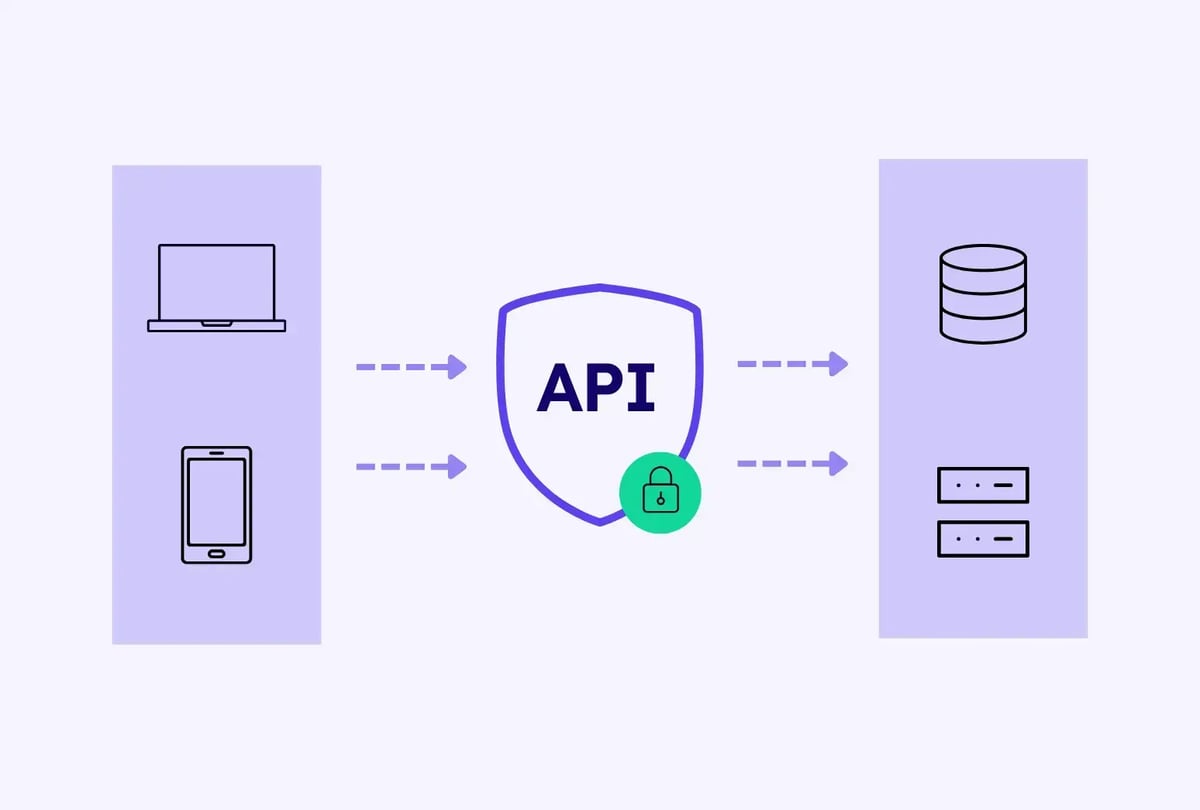
An API (application programming interface) is the bridge that allows one system or application to talk to another for sharing data, triggering actions, or requesting services. Every time software connects, integrates, or automates, an API is doing the work behind the scenes. That same connectivity that drives innovation also creates new pathways attackers can exploit, which is why API security matters for every SaaS environment.
What is API security?
API security is the practice of protecting application programming interfaces and the endpoints, data, and identities they expose, so that only authorized entities can access or modify information. It spans design, implementation, and operations, treating every API as a first‑class attack surface that requires the same rigor as any other system entry point.
Because APIs now power everything from mobile apps to SaaS integrations and IoT devices, unsecured endpoints have become a favorite target for attackers seeking sensitive data or service disruption. A strong API security posture requires more than network firewalls. It demands controls that verify every call, validate every response, and monitor every interaction for signs of misuse.
The core pillars of API security include:
- Authentication and authorization: Verify who or what is calling the API using standards such as OAuth 2.0, OpenID Connect, or JSON Web Tokens (JWTs).
- Data protection: Encrypt sensitive data in transit and at rest, and limit responses to only what’s necessary.
- Rate limiting: Throttle requests to prevent brute‑force or denial‑of‑service attacks.
- Logging and monitoring: Maintain continuous visibility across all API activity to detect anomalies and policy violations.
Following a zero‑trust model strengthens these defenses: treat every API call as untrusted until verified, and continuously monitor for unusual access patterns or privilege escalation.
For SaaS and AI environments, this kind of continuous monitoring aligns directly with Vorlon’s approach to data‑centric security where every integration and data flow is validated, audited, and governed in real time.
Why is API security important in SaaS environments?
APIs are the connective tissue of every SaaS platform; powering authorization, automation, integrations, and AI features. But, the same connections that make SaaS agile also make it fragile. In a multi‑tenant, highly integrated environment, a single misconfigured or exposed API can cascade across tenants, leak sensitive data, or open a trusted backdoor for attackers.
Every API call carries context: authentication tokens, customer data, and system commands. When those calls aren’t secured, the result isn’t just a data breach. It’s a breakdown of trust, compliance, and business continuity.
The biggest reasons API security is critical for SaaS include:
- Multi‑tenancy and blast radius: A single vulnerability (like a broken object‑level authorization, or BOLA) can expose data from multiple customers.
- Integration supply chain risk: OAuth apps, webhooks, and marketplace integrations can become attack paths if scopes are excessive or secrets are leaked.
- Overpowered admin APIs: Tenant‑level APIs often have permissions to change security policies, export data, or create new users, making them high‑value targets.
- Shadow APIs and sprawl: Teams frequently connect tools outside central review, leaving unmonitored endpoints and untracked data flows.
- Compliance pressure: Customers and regulators now expect provable API‑layer controls for access, logging, and data retention to meet frameworks like GDPR, HIPAA, and SOC 2.
- Automation and AI usage: Bots, CI/CD pipelines, and AI agents amplify both productivity and risk, especially when tokens or machine identities aren’t governed.
- Third‑party dependencies: SaaS ecosystems rely on numerous external APIs; one weak integration can compromise the entire environment.
In short, APIs are the operational backbone of SaaS and the most direct gateway to your data. Leaving them unprotected exposes not just infrastructure, but contracts, compliance posture, and customer trust.
Best practice: Establish continuous discovery of all APIs (internal, external, and partner) and integrate those findings with your SaaS Security Posture Management (SSPM) tools to maintain configuration compliance and visibility.
SaaS APIs move data between apps, authenticate users, and execute admin commands, often with broad permissions. In multi-tenant environments, one misconfigured endpoint can expose data across multiple customers. Attackers exploit this by stealing tokens, abusing business logic, or targeting integrations that connect your entire stack.
What are the most common API vulnerabilities?
Most API breaches exploit a handful of predictable flaws. The OWASP API Security Top 10 catalogs the risks that matter most, and in SaaS environments where APIs handle multi-tenant data and connect across dozens of tools, these vulnerabilities can cascade across your entire customer base.
- Broken object-level authorization (BOLA) is the most common and dangerous flaw. An attacker changes an ID in the API path or request body to access another user's data. For example, GET /api/orders/12345 returns someone else's order if the API doesn't verify that the caller actually owns that resource. BOLA is especially damaging in multi-tenant SaaS: one missing ownership check can expose data across all customers. The fix requires enforcing object-level authorization on every read and write, using non-guessable identifiers, and centralizing authorization logic so it can't be bypassed.
- Broken authentication lets attackers impersonate legitimate users or services. This happens when tokens are long-lived, stored insecurely, or issued without proper validation. A mobile app that exchanges an authorization code without PKCE (Proof Key for Code Exchange) is vulnerable to code interception and replay attacks. Short-lived tokens, refresh-token rotation, and OAuth 2.0 best practices (including PKCE for public clients and mTLS or DPoP for binding) close these gaps.
- Broken object property level authorization occurs when APIs allow users to modify or read object properties they shouldn't access, even if they have legitimate access to the object itself. An attacker might change "isAdmin" : false to "isAdmin": true in a PATCH request, or read salary fields they shouldn't see. The solution is validating allowed properties for each role and operation, not just checking object-level access.
- Unrestricted resource access enables attackers to access resources through indirect references or predictable patterns. Unlike BOLA, this exploits weak filtering or pagination logic to enumerate datasets or bypass intended access boundaries. Proper filtering, access controls on collections, and avoiding predictable resource patterns prevent this.
- Broken function level authorization happens when APIs don't verify that a user has permission to execute a specific function. A standard user might call an admin-only endpoint like DELETE /api/users/{id} simply because the API doesn't check role permissions at the function level. Every endpoint must validate not just who is calling, but what they're allowed to do.
- Unrestricted access to sensitive business flows allows attackers to abuse legitimate workflows for malicious purposes. Examples include purchasing items without payment, bypassing approval workflows, or automating actions that should require human verification. Rate limiting alone won't stop this—you need business logic validation, step verification, and anomaly detection to catch abuse.
- Server-side request forgery (SSRF) tricks APIs into making requests to internal systems or external resources on behalf of an attacker. An API that fetches user-supplied URLs without validation can be used to scan internal networks, access cloud metadata endpoints, or exfiltrate data. Input validation, allowlists for external requests, and network segmentation mitigate SSRF risks.
- Security misconfiguration encompasses default credentials, overly permissive CORS policies, verbose error messages, and unpatched systems. An error that returns stack traces or database schema details gives attackers a roadmap. Hardening configurations, removing default settings, and auditing across environments is foundational hygiene.
- Improper inventory management is the silent killer. Shadow APIs (endpoints deployed by developers but never registered with security) and deprecated APIs that were never decommissioned remain active, unmonitored, and unpatched. Attackers find them through reconnaissance and exploit them without detection. Continuous API discovery ensures you know what's exposed before an attacker does.
- Unsafe consumption of APIs happens when your application trusts third-party or internal APIs without validation. If a downstream API is compromised or returns malicious data, your system processes it without question. Validate all API responses, sanitize data before use, and implement timeout and error handling to prevent cascading failures.
BOLA accounts for the majority of API breaches in multi-tenant environments. Broken authentication, excessive data exposure, and improper inventory management follow closely. Most of these flaws are preventable with authorization checks, token hygiene, and continuous discovery.
How do API breaches occur?
API breaches happen when attackers exploit weak authentication, excessive permissions, or misconfigurations to access sensitive data. Unlike perimeter-based attacks, API breaches often use legitimate credentials and valid endpoints. The attacker doesn't break in. They log in, and the system lets them move laterally because authorization checks are missing or incomplete.
Common attack patterns include:
- Stolen or leaked credentials. Developers hardcode API keys in public repositories, store tokens in unencrypted files, or use long-lived credentials that never expire. Attackers scrape GitHub, scan configuration files, or compromise a single developer workstation to gain access. Once they have a valid token, they can impersonate the legitimate user or service and access any data the credential permits.
- Business logic abuse. Attackers manipulate legitimate API functions to extract data or bypass restrictions. For example, an API that allows users to export their own data might not verify ownership properly. An attacker automates requests, incrementing user IDs or account numbers, and exports entire datasets without triggering rate limits or access controls. The API works exactly as designed, but the design assumes every caller is honest.
- Insecure direct object references (IDOR). This is BOLA in action. An attacker changes an ID in the request path or body to access another user's records. GET /api/invoices/9876 returns someone else's invoice because the API checks authentication but not authorization. In multi-tenant SaaS environments, a single IDOR flaw can expose data across all customers.
- Shadow and forgotten APIs. Deprecated endpoints that were never decommissioned, internal APIs accidentally exposed to the internet, or development endpoints left active in production remain unmonitored and unpatched. Attackers discover them through reconnaissance, API documentation leaks, or automated scanning. These endpoints often lack the security controls applied to production APIs because no one remembers they exist.
- Third-party integration compromise. SaaS ecosystems rely on OAuth-connected apps, webhooks, and marketplace extensions. When a third-party tool is compromised or grants excessive permissions, attackers pivot through the integration to access your data. The breach doesn't start in your environment. It starts in a vendor's system, but the impact cascades across every connected application.
- Lack of rate limiting. Without request quotas, attackers scrape datasets, enumerate users, or brute-force authentication at scale. Automated tools make thousands of API calls per minute, extracting data faster than manual review can detect. By the time security teams notice unusual traffic patterns, the data is already exfiltrated.
The common thread across these attack patterns is that prevention requires more than perimeter security. It requires context into how APIs connect, what data they access, and which identities have permission to call them.
Most API breaches use valid credentials and legitimate endpoints, which means traditional security tools won't flag them as suspicious. Perimeter defenses, firewalls, and authentication logs show normal logins and authorized API calls. Attackers exploit missing authorization checks, abuse business logic, or pivot through third-party integrations, all while appearing legitimate. Detection requires real-time monitoring of API behavior across the entire SaaS ecosystem, not just authentication events.
How can you monitor and secure APIs across SaaS applications?
Effective API security requires continuous discovery, real-time monitoring, and centralized visibility across your entire SaaS ecosystem. In SaaS environments, most security teams don't have a complete inventory of their APIs. Shadow endpoints, third-party integrations, and deprecated versions expand the attack surface without appearing in any central registry. But discovery alone isn't enough: you need to map how APIs connect, what data they exchange, and which identities have access. Context and connections turn an inventory into actionable security intelligence.
To monitor and secure APIs effectively:
- Inventory and classify all APIs. Identify internal, partner, and external APIs across environments. Classification matters because not all APIs carry the same risk. An admin API that can export customer data requires stricter controls than a read-only status endpoint. Tag APIs by data sensitivity, tenant scope, and authentication requirements to prioritize monitoring.
- Implement real-time monitoring. Behavioral analytics detect anomalies like sudden spikes in request volume, access from unfamiliar geolocations, or unusual data export patterns that signal credential compromise or automated scraping. In SaaS ecosystems, monitoring needs to track data flows between systems, not just within them. An attacker who steals a token from one app can pivot through integrations to access data in another.
- Apply rate limits and throttling. Without request quotas, attackers can enumerate datasets, brute-force authentication, or overwhelm infrastructure with denial-of-service attacks. Apply rate limits per identity (user, service account, API key) and per endpoint, with different thresholds based on risk.
- Centralize visibility. Integrate API activity with your SIEM, SOAR, and ITSM tools so alerts trigger automated response workflows. This includes revoking compromised tokens, blocking suspicious IPs, or escalating to incident response teams. Without integration, API security becomes another silo that teams have to check manually.
- Use API gateways. Gateways enforce authentication, authorization, rate limiting, and logging in a single layer. This prevents teams from implementing security controls inconsistently. They also provide a chokepoint for monitoring: every request passes through, making it easier to detect patterns and enforce compliance policies.
In SaaS environments, where APIs are the primary mechanism for integration and automation, securing them requires unified visibility across the entire ecosystem, not just individual applications. Vorlon's platform provides agentless discovery and real-time monitoring of API activity across SaaS and AI tools, mapping data flows, connections between systems, and the identities that access them so you can detect threats that span multiple applications.
What are best practices for API governance and discovery?
Effective API governance prevents security gaps before they become breaches. Without consistent policies, teams deploy APIs with different authentication methods, inconsistent logging, or no documentation at all. This creates blind spots, makes incident response slower, and leaves deprecated endpoints exposed. Governance ensures that every API is discoverable, documented, and compliant from the start.
Best practices include:
- Standardize design. Use naming conventions, version control, and consistent error handling across all APIs. Standardization makes it easier to audit, monitor, and troubleshoot. It also prevents teams from reinventing security controls for every new endpoint.
- Centralize documentation. Maintain an API catalog with owners, versions, and data classifications. When an incident occurs, security teams need to know who owns the API, what data it handles, and how it connects to other systems. A centralized catalog makes this information immediately available.
- Automate compliance checks. Integrate policy enforcement into CI/CD pipelines so APIs are validated before they reach production. Automated checks catch misconfigurations, missing authentication, or overly permissive access controls during development, not after deployment.
- Retire old APIs. Decommission deprecated versions to prevent shadow endpoints. Forgotten APIs remain active, unmonitored, and unpatched. Attackers find them through reconnaissance and exploit them without detection. Regular audits and automated retirement workflows close this gap.
- Assign ownership. Designate responsible teams for every API. Clear ownership ensures accountability for security, updates, and incident response. Without it, APIs become orphaned and fall outside governance entirely.
Continuous API discovery is the foundation of effective governance. Automated discovery ensures that new APIs are registered, reviewed, and compliant before they're exposed. In SaaS environments, where integrations and automations create APIs faster than manual processes can track, automation is the only way to maintain control. Vorlon's data-centric approach provides continuous discovery across SaaS and AI ecosystems, mapping APIs, data flows, and identities in real time.
API governance requires standardized design, centralized documentation, automated compliance checks, and continuous discovery. Assign clear ownership and retire deprecated APIs to prevent shadow endpoints from becoming attack vectors.
How does API security connect to data protection and compliance?
APIs are the primary mechanism for moving and accessing regulated data in SaaS environments. They handle personal identifiable information (PII), financial records, health data, and operational details that fall under laws like GDPR, HIPAA, and SOC 2. When APIs lack proper controls, organizations face data breaches, regulatory fines, and loss of customer trust. Securing APIs isn't just a technical requirement. It's how you prove compliance and protect the data regulators care about most.
Common compliance requirements include:
- Encryption. Protect data in transit using TLS 1.2 or higher and at rest using AES-256 or stronger encryption. Regulators expect encryption as a baseline control. Without it, even minor incidents can trigger breach notification requirements.
- Data minimization. Only return necessary data fields in API responses. Excessive data exposure violates the principle of least privilege and increases the risk of unauthorized disclosure. APIs should filter responses based on the caller's role and need to know.
- Audit logging. Track who accessed what data and when. Compliance frameworks require detailed logs that show access patterns, changes to sensitive records, and administrative actions. Logs must be tamper-proof and retained according to regulatory timelines.
- Breach notification. Detect and report incidents within regulatory timeframes. GDPR requires notification within 72 hours of discovery. HIPAA mandates reporting within 60 days. Without real-time monitoring and automated alerting, meeting these deadlines becomes nearly impossible.
API controls must align with broader data protection programs. Continuous monitoring provides the visibility needed to detect unauthorized access or anomalous behavior before it becomes a reportable breach. Audit-ready reporting simplifies compliance reviews by showing exactly how data flows through your ecosystem, who has access, and what controls are enforced. Vorlon's platform maps sensitive data flows across SaaS and AI tools, providing compliance-ready reports that prove due diligence and reduce audit preparation time.
Securing third-party API connections with Vorlon
Your SaaS ecosystem runs on third-party connections. OAuth apps sync data between your CRM and marketing tools. Webhooks trigger workflows across finance and operations platforms. AI copilots access customer records to generate insights. Each integration requires API access, and each API connection expands your attack surface.
The space between applications
Traditional SaaS Security Posture Management (SSPM) tools monitor configurations within individual applications. They check user permissions, flag misconfigurations, and audit settings inside Salesforce, Microsoft 365, or Google Workspace. But they don't see what happens in the space between those applications—the API calls that move data, the OAuth tokens that grant cross-app access, the integrations that connect your stack.
This is where third-party risk lives. An attacker compromises a vendor, inherits its API permissions, and moves through your ecosystem without triggering alerts. The API calls look legitimate because they are legitimate—they're just being used by the wrong party. Security teams approve the initial OAuth grant but rarely see what happens after: which data the integration accesses, how behavior changes over time, or when a compromised tool starts pivoting laterally.
How Vorlon secures the connections
Vorlon goes beyond traditional SSPM by monitoring the APIs, data flows, and identities that connect your SaaS and AI ecosystem. The platform discovers every third-party integration, maps how data moves between systems, and tracks API behavior continuously. When a third-party tool starts accessing unusual data volumes, connecting from unexpected locations, or calling APIs it hasn't used before, Vorlon detects the anomaly in real time.
Response is automated. Revoke OAuth tokens. Disable compromised integrations. Trigger workflows in your SIEM or SOAR platform. Vorlon provides the controls to stop it before data is exfiltrated.
For compliance teams, Vorlon delivers audit-ready documentation showing which third-party tools access regulated data, what permissions they hold, and how information flows across your ecosystem. This visibility simplifies audits and proves due diligence when regulators ask how you govern third-party API risk.
Third-party API security requires monitoring the connections between your applications, not just the configurations within them. Learn more about Vorlon's approach to SaaS and AI ecosystem security.
From visibility to control
APIs are how data moves, how systems integrate, and how attackers gain access while perimeter defenses hold. The vulnerabilities are well-documented. The attack patterns are predictable. But prevention requires more than knowing the risks. It requires continuous discovery, real-time monitoring, and governance that keeps pace with how fast teams deploy and integrate.
Start with inventory. In SaaS environments, shadow integrations and deprecated endpoints expand faster than manual tracking can follow. Map the connections between your applications, not just the configurations within them. Understand what data flows where, which identities have access, and which third-party tools hold permissions that could be exploited.
Automate where possible. Compliance checks in CI/CD pipelines catch misconfigurations before deployment. Behavioral monitoring detects anomalies that authentication logs miss. Automated responses like revoking tokens, disabling integrations, and triggering SIEM workflows stop breaches in minutes instead of days.
As AI adoption accelerates and SaaS ecosystems grow more interconnected, the space between your applications will only become more complex. The organizations that secure it with unified visibility, continuous monitoring, and coordinated response will be the ones that can innovate without exposing their data.
Download Vorlon's solution brief to see how unified visibility and automated response protect the APIs that connect your stack.


.png?width=400&height=300&name=Untitled%20(11%20x%208.5%20in).png)
.png?width=400&height=300&name=Copy%20of%20Get%20A%20Demo%20(8).png)
.png?width=329&height=222&name=blog%20451%20why%20saas%20and%20ai%20are%20converged%20(1).png)